

Bulk Solar Panels South Africa: 2026 Procurement and Hardware Guide
Procuring solar hardware at scale is no longer just about finding the lowest price; it's a strategic race against the 31 March 2026 mandatory registration deadline. You already know that buying individual units at retail rates destroys your project margins and complicates logistical planning. Sourcing bulk solar panels South Africa is the only viable path to maintaining a competitive edge while managing the 10% import tariff on crystalline silicon modules. Efficiency in procurement means moving beyond simple unit costs to focus on pallet-level integrity and technical compatibility.
This guide provides the specific technical data and procurement strategies needed to secure Tier 1 hardware without the typical risks of pallet breakages or inverter mismatch. You'll master the synergy between high-wattage panels, such as the JA 620W bifacial units, and market-leading Sunsynk or Deye hybrid inverters. We examine pallet dimensions, current ZAR pricing structures, and the essential hardware requirements to ensure your 2026 energy projects deliver maximum ROI. From understanding the 15% ad valorem duty on lithium-ion batteries to optimising panel-to-inverter ratios, this hardware-first approach streamlines your entire supply chain.
Key Takeaways
- Understand the financial logic of purchasing bulk solar panels South Africa to significantly lower the per-watt cost and maximise the ROI of your energy projects.
- Identify the technical advantages of N-Type TOPCon technology and 600W+ ultra-high power modules for high-volume installations.
- Ensure seamless hardware integration by matching bulk panel specifications with the specific input parameters of Sunsynk and Deye hybrid inverters.
- Streamline project logistics by mastering pallet standards and delivery requirements for large-scale solar hardware rollouts.
- Maximise budget efficiency by adopting a hardware-only procurement model that eliminates installation markups and provides direct access to Tier 1 components.
Scaling Your Energy Independence with Bulk Solar Panels
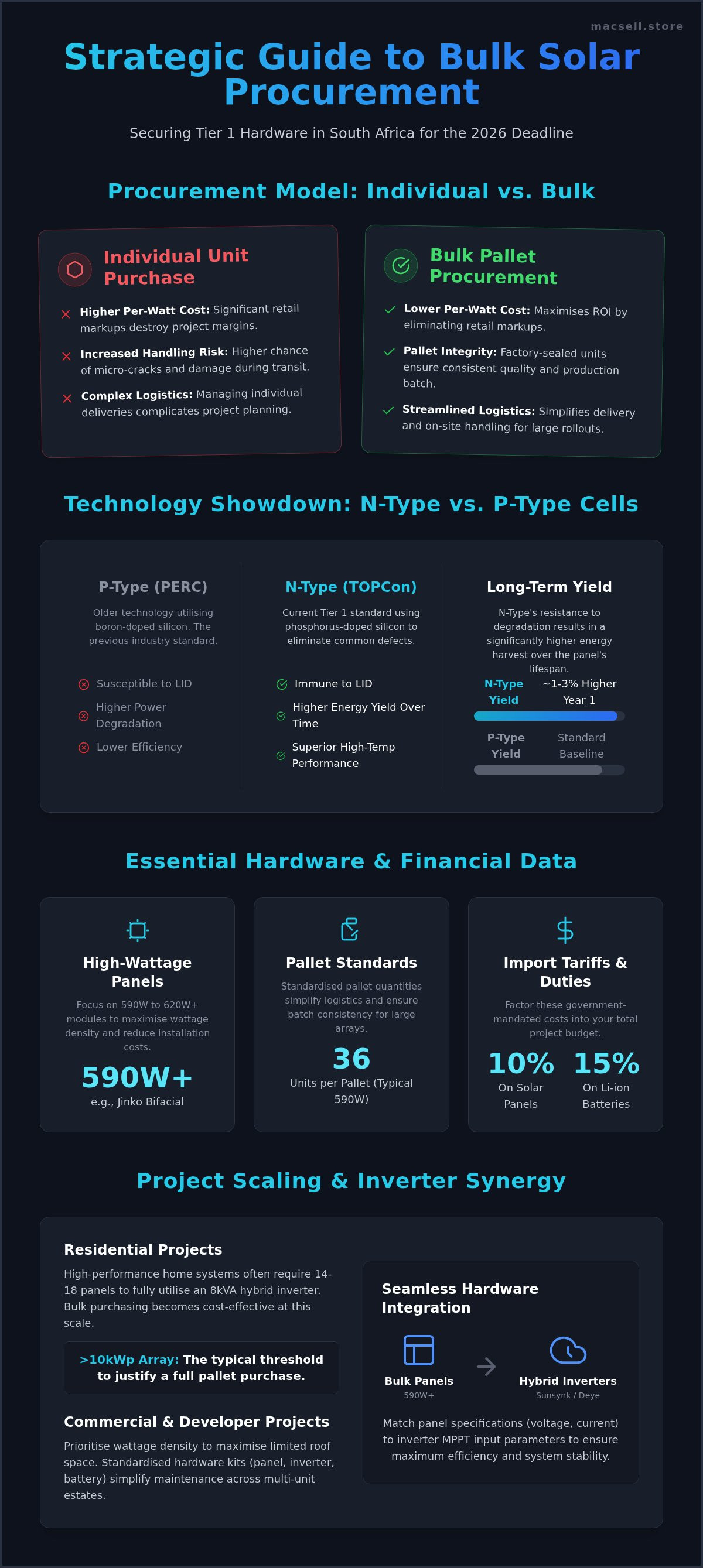
The 2026 energy landscape is defined by mandatory grid registration and 12-15% annual tariff hikes. Relying on small, piecemeal upgrades is inefficient. Securing bulk solar panels South Africa allows for a unified hardware rollout that addresses total energy independence before regulatory deadlines. A project typically justifies a bulk transition once the array exceeds 10kWp. At this scale, the logistical savings on shipping and handling outweigh the inventory holding costs. Current market trends show a definitive shift toward high-wattage modules (590W to 620W) which maximise energy harvest per square metre. This transition is essential as solar power in South Africa evolves from a backup necessity into a primary financial asset.
Pallet Procurement vs. Individual Unit Purchase
Buying by the pallet remains the most effective way to reduce the price per watt metric. Individual units carry significant retail markups and increased handling risks. Palletised hardware is factory-sealed. This minimises the risk of micro-cracks during transit and ensures the glass remains pristine until it reaches the site. Standard pallet quantities vary by module size. For instance, high-output Jinko 590W panels typically arrive in pallets of 36 units. Moving to full pallets simplifies logistics and ensures that every module in your array comes from the same production batch. This maintains consistent electrical characteristics across the string, which is vital for long-term performance and balance of system efficiency.
Bulk Requirements for Residential vs. Commercial Projects
Residential energy needs have scaled alongside the popularity of high-capacity hybrid systems. A typical high-performance installation featuring a Sunsynk 8KVA combo often requires 14 to 18 panels to fully saturate the inverter's MPPT capacity. At this volume, purchasing a full pallet is often more cost-effective than buying exact quantities. Commercial projects face different constraints. They prioritise wattage density to maximise limited roof space. For developers of multi-unit residential estates, procurement strategies focus on standardised hardware kits. Using identical panels across multiple units simplifies long-term maintenance. It also ensures technical synergy with standardised battery and inverter setups from brands like Deye or Sunsynk, reducing the complexity of managing diverse hardware across a large portfolio.
Technical Specifications: Wattage, Efficiency, and Pallet Standards
Bulk procurement in 2026 centres on N-Type TOPCon (Tunnel Oxide Passivated Contact) technology. This architecture has superseded older P-Type PERC cells as the primary standard for bulk solar panels South Africa. The shift is driven by superior conversion efficiencies and better performance in high-ambient-temperature environments. When purchasing at scale, the technical focus must remain on wattage density and degradation curves. Tier 1 certification remains the baseline for hardware bankability. It ensures that the manufacturer has the financial standing to honour 25-year linear power warranties. Adhering to solar industry standards is critical for ensuring that bulk-purchased modules comply with SANS 61215 for design and testing.
N-Type vs. P-Type Technology Explained
N-Type panels utilize phosphorus-doped silicon, which eliminates the boron-oxygen defects found in P-Type cells. This makes them immune to Light Induced Degradation (LID), resulting in a higher energy yield over the first year of operation. These modules perform better in low-light conditions, such as early morning or late afternoon, and feature a lower temperature coefficient. This means they lose less power as the South African sun heats the cells. N-Type technology represents the current industry benchmark for solar module efficiency and long-term yield. For high-volume projects, this tech ensures that the initial capital outlay is protected against rapid performance drops.
Efficiency Ratings and Wattage Density
Wattage density directly impacts the total cost of a project. A 550W or 600W+ module occupies a similar physical footprint to older 450W units but produces significantly more power. This reduction in the total number of panels required lowers the costs for mounting rails, cabling, and clamps. When evaluating hybrid inverter prices, consider how higher wattage panels allow you to reach the inverter's maximum DC input with fewer strings. This simplifies the wiring and reduces the labour time per kilowatt installed. High-density arrays are essential for commercial sites with limited roof space where every square metre must be optimised for maximum generation.
Bifacial panels offer the best value for high-volume ground-mount or flat-roof installations. These modules harvest light from both sides, utilizing the albedo effect from the surface below. In South African conditions, bifacial units can provide a 5% to 25% gain in energy harvest compared to monofacial equivalents. This extra generation effectively lowers the levelised cost of energy (LCOE) over the system's life. Browse our solar panel inventory to compare current N-Type bifacial specifications against your project requirements.
Comparing High-Wattage Panels for Bulk Purchase
Selecting specific modules for bulk solar panels South Africa requires a focus on balancing raw energy output with physical site constraints. Tier 1 manufacturers like Jinko, Longi, and Seraphim currently provide the most bankable options for the local market. Mechanical load ratings are a critical specification; most premium modules are tested to withstand a 5400 Pa front load and 2400 Pa back load. These ratings ensure the array can survive extreme South African weather events, including high-velocity winds and heavy hail. Warranty structures also differ between brands. It's essential to distinguish between the product warranty, which covers manufacturing defects, and the linear performance warranty that guarantees power output over 25 to 30 years.
High-Wattage Panels (550W to 650W)
Ultra-high power modules, such as the Jinko 620W or Longi 615W bifacial units, are designed for maximum density in commercial and ground-mount applications. These panels often utilise larger M10 or G12 wafers, resulting in higher current outputs. You must verify that your chosen string or hybrid inverter can manage an Imp (current at maximum power) that often exceeds 13.5A. Logistically, these modules are more demanding. They typically measure over 2.2 metres in length and weigh approximately 30kg to 34kg. This requires specialised handling protocols and reinforced mounting structures to prevent structural fatigue or micro-cracking during the installation process.
Standard Efficiency Units (450W to 500W)
The 450W to 500W range remains a strategic "sweet spot" for residential applications. This category is frequently highlighted in any solar system hardware cost breakdown because of its versatility. These panels are easier for smaller teams to handle on steep residential roofs and fit more comfortably around architectural features like chimneys or skylights. Units like the Seraphim 460W N-Type offer high efficiency in a more manageable form factor. Availability is another key advantage. Because these dimensions have been standard for several years, sourcing a single replacement unit for a damaged array is significantly easier than finding a matching 650W module in the future.
Logistics and Inverter Compatibility: Organising a Bulk Rollout
Successful delivery of bulk solar panels South Africa requires precise site coordination and logistical planning. A standard pallet of 36 high-wattage modules weighs over 1,100kg. Delivery vehicles require clear, level access with a minimum of 4 metres of vertical clearance for crane or forklift operation. Manually offloading individual panels from a pallet is inefficient and increases the risk of edge damage. Use a heavy-duty pallet jack or a forklift for the initial offload to keep the factory seal intact. Securing the hardware on-site is equally vital. High-value components like Tier 1 panels and inverters attract theft; ensure a lockable, weather-protected storage area is prepared before the delivery vehicle arrives.
Matching Panels to Sunsynk and Deye Inverters
Technical synergy between your panel array and inverter is non-negotiable for system longevity. When evaluating Deye inverter options, prioritise the MPPT voltage limits over raw cost. A typical 8KVA hybrid unit features an MPPT operating range of 125V to 425V. If you're using 550W panels with an open-circuit voltage (Voc) of 50V, a string of 8 panels provides a nominal 400V. This configuration stays safely within the upper limit while allowing for the natural voltage increase that occurs during cold South African winter mornings. Over-stringing leads to immediate inverter shutdown or permanent hardware failure. This energy must be balanced by a high-performance Hubble AM5+ lithium battery to manage the high current output of a bulk PV array during low-demand periods.
Storage and Handling Best Practices
Improper storage causes invisible internal damage that manifests as hot spots years later. Panels must always be stored vertically on their long edge. Flat stacking puts immense pressure on the bottom units, leading to micro-cracks in the silicon wafers. Keep the original factory pallet wrapping and corner protectors intact until the day of installation to shield the glass from moisture and dust. Use a specialised glass handling trolley for moving panels from the storage area to the mounting site. This methodical approach preserves the 25-year lifespan of your investment. Avoid leaning panels against walls or stacking them in high-traffic areas where they might be bumped or kicked.
View our current bulk solar hardware inventory to plan your next project rollout with precision.
Procuring Solar Hardware: The MacSell Solar Outlet Advantage
MacSell Solar Outlet operates as a dedicated national hardware retailer. This national retailer focuses on high-end component distribution without the overhead of installation services. Procuring bulk solar panels South Africa through a hardware-only model ensures complete price transparency. Buyers see the exact cost of Tier 1 modules, lithium batteries, and hybrid inverters. This approach eliminates the hidden mark-ups often found in turnkey installation quotes. It allows for more granular control over the project budget. Professionals and homeowners gain access to an expert-curated inventory including Sunsynk, Deye, and LuxPower hardware from a single, reliable source.
Hardware-Only Procurement vs. Full-Service Contracts
Full-service contracts typically bundle hardware costs with labour and project management fees. This often obscures individual component prices. Sourcing hardware directly from MacSell Solar Outlet simplifies the supply chain. Independent installers and DIY experts maintain total control over brand selection and component quality. This model is particularly effective for large-scale roll-outs. Saving a few cents per watt on bulk solar panels South Africa results in significant total project savings. It also ensures that the hardware arrives on-site exactly when needed; you aren't tied to a specific installer's schedule or limited by their preferred brand partnerships. You get exactly what you order without unnecessary fluff.
Pre-Configured Combo Kits and Bulk Options
Technical friction is a common barrier in large-scale solar projects. MacSell Solar Outlet addresses this through pre-configured hardware sets. The Sunsynk 8KVA and 2x Hubble AM5+ Combo Kit is a prime example of pre-tested synergy. These kits ensure that the inverter's communication protocols are fully compatible with the battery management system (BMS). Choosing a pre-tested inverter and battery combo for home use reduces the time spent on commissioning and troubleshooting. National delivery capabilities ensure that these specialised kits reach sites across the country efficiently. This procurement model combines the cost benefits of bulk purchasing with the technical assurance of expert-curated hardware.
Shop Solar Panels & Hardware at MacSell Solar Outlet
Tier 1 panels, inverters, and battery kits with national delivery across South Africa.
→ Browse Solar Panels & Accessories
→ Shop Sunsynk 8KVA & Hubble AM5+ Combo Kit
→ Shop Hubble AM5+ 5.12kWh Battery
→ Browse All Inverter & Battery Combos
Optimising Your 2026 Solar Infrastructure Rollout
Navigating the transition to large-scale PV arrays requires a technical focus on wattage density and hardware compatibility. Moving toward full pallet procurement remains the most effective method for reducing per-watt costs while ensuring consistent module quality across your project. By prioritising N-Type TOPCon technology and Tier 1 certifications, you secure long-term energy yields that withstand the 31 March 2026 registration deadline and beyond. Technical precision in string sizing and inverter matching is the difference between a failing system and a high-performance financial asset.
Successful implementation depends on the synergy between your panel strings and high-performance hybrid inverters like Sunsynk or Deye. Sourcing bulk solar panels South Africa through a hardware-only model provides the transparency needed to manage project margins without hidden service markups. MacSell Solar Outlet serves as an authoritative national distributor for LuxPower, Hubble, and premium solar modules. Browse our latest bulk solar hardware and inverter kits to streamline your procurement process. Securing the right hardware today ensures your energy independence is built on a foundation of technical reliability and performance.
Frequently Asked Questions
How many solar panels are typically included in a full pallet?
Most Tier 1 manufacturers package between 30 and 36 modules per pallet. For example, a pallet of Jinko 590W bifacial units contains exactly 36 panels. Quantities vary based on the physical dimensions and glass thickness of the specific model. Always verify the pallet count before arranging transport to ensure your vehicle's payload capacity can manage the total weight, which often exceeds 1,100kg.
Is it significantly cheaper to buy solar panels in bulk in South Africa?
Purchasing bulk solar panels South Africa reduces the per-watt cost compared to individual retail units. Bulk orders eliminate the high handling fees and individual packaging costs associated with single modules. You also save on logistics by consolidating shipping into a single delivery. This model is essential for maintaining project margins in 2026, especially when factoring in the 10% import tariff on crystalline silicon modules.
What is the best wattage to choose for a bulk residential solar project?
The 450W to 500W range is currently the most efficient choice for residential rooftops. These modules offer a balance between high energy density and manageable physical dimensions. While 600W+ panels exist, their larger size makes them difficult to manoeuvre on steep residential pitches. Choosing standard-sized units also ensures easier replacement in the future if a single module within the array sustains damage.
Can I mix different wattages of solar panels if I buy them in bulk?
Mixing different wattages or brands within a single string is not recommended. The inverter's MPPT will typically throttle the entire string to the performance level of the lowest-rated panel. This leads to significant energy losses and potential hardware strain. If your project requires different wattages, ensure they are isolated on separate MPPT trackers to maintain system efficiency and protect your long-term hardware investment.
Do bulk solar panels come with the same warranty as individual units?
Yes, bulk-purchased modules from Tier 1 manufacturers carry the same warranty protections as individual units. This typically includes a 12 to 15-year product warranty and a 25 to 30-year linear power output guarantee. Ensure you receive the official warranty certificates for the specific batch numbers delivered. These documents are vital for the mandatory registration of your system with Eskom or your local municipality before the 2026 deadline.
How should I transport and store a pallet of solar panels safely?
Transport pallets using a vehicle with a flat load bed and secure them with industrial-grade ratcheting straps. Once on-site, store the modules vertically on their long edges in a dry, covered area. Don't stack pallets on top of each other or store individual panels flat. Keeping the original factory wrapping and corner protectors intact until the day of installation prevents moisture ingress and accidental glass breakage.
What is the difference between Tier 1 and Tier 2 panels in bulk procurement?
Tier 1 manufacturers are defined by their financial stability and large-scale production capabilities. These brands are bankable, meaning their warranties are more likely to be honoured over a 25-year period. Tier 2 manufacturers often lack the same level of automated quality control and R&D investment. For bulk solar panels South Africa projects, sticking to Tier 1 brands ensures compliance with SANS 61215 standards and better long-term reliability.
Do I need special equipment to offload a bulk solar panel delivery?
Yes, a forklift or a heavy-duty pallet jack is essential for safe offloading. A full pallet can weigh over a tonne, making manual handling impossible and dangerous. If your site lacks a loading dock, ensure the delivery vehicle is equipped with a tail-lift or a truck-mounted crane. Attempting to break down a pallet while it is still on the truck increases the risk of dropping modules and causing micro-cracks.